In the year 1947, Chung Ju Yung initiated the Hyundai Engineering Construction Company, but it was not until 1967 that the Hyundai Motor Company was instituted; and it was not until twenty years later that Hyundai burst into the American market. In order to fully grasp the breadth of this company’s progression, it is imperative to start at the origin of the brand.

In May of 1947, the Hyundai Group became the United State’s Army’s preferred manufacturing company during the Korean War. By the sixties, Hyundai had begun to focus its efforts on the automotive market and it entered into a contract with the Ford Motor Company. Together they built and released their first vehicle, the Cortina. Then, in 1972, the government of South Korea relegated the privilege of producing cars to merely four companies; among these companies was Hyundai.
Further, the Hyundai company did not stop at producing cars for Korea. In 1986, the company flung itself at full speed into the American market, and christened this move with its sale of the Hyundai Excel. This vehicle was spectacularly well received by the United States car consumers and it was in nomination for the “Best Product #10” by Fortune Magazine. While this car, at first, enjoyed much positive attention due to its affordable price, the Excel eventually harbored a highly negative rap and became a source of comedy material in the United States. For example, David Letterman made the joke that the only reason Hyundai was so inexpensive was due to compromised and lacking quality of the vehicle. The poor quality of the cars being shipped to the United States garnered a besmirched reputation for the company and sales plummeted in no time. Hyundai could easily and understandably have written off the American market entirely, but the company pressed on and eventually regained its notoriety with the acquisition of a fellow Korean automobile manufacturer, Kia.
This was a smart business move on Hyundai’s part, and as the new millennium rolled in, so did the sales. In 2003, Hyundai was ranked on the same plane as Honda, according to Consumer Reports on car reliability. This was a critical accomplishment for the company and opened many doors to high quality awards. Among the accolades were the following: Hyundai was the Highest Ranked Non-Premium Nameplate in a quality study done by J.D. Power and Associates (in 2009); Hyundai was a top choice according to the Strategic Vision Total Quality Awards (in 2007).
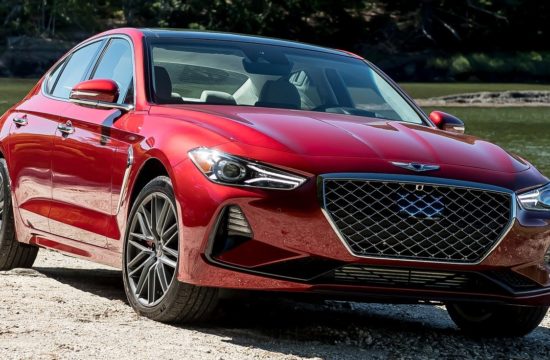
Today, Hyundai is renowned for its sport utility vehicles like the Hyundai Santa Fe, Hyundai Veracruz, and Hyundai Tucson; its selection of vans and minivans such as the Hyundai HED-5 and the Hyundai Entourage; and of course, its other cars like the Hyundai Veloster, Hyundai Genesis Coupe, Hyundai Sonata Hybrid, Hyundai Elantra, Hyundai Accent, Hyundai Tiburon, Hyundai Scoupe and Hyundai XG350, among many others.
At present, Hyundai exports its vehicles across the world, including countries like Canada, India, Turkey, Russia, Egypt, Russia, China, Japan, the Philippines and New Zealand, among others. In terms of research and improvement, the car company has development sites in Korea, Germany, India, and Japan, while there is a site for designing purposes in the United States as well.